
BOOK YOUR WORKSHOP TODAY
All posts published here are presented as casual conversation pieces to provoke thought in some direction or another, they do not necessarily represent fixed opinions of the Inner Council, as our work exists beyond the spectrum of bound statement and singular clause.
A clear introduction to childhood trauma, the wounded Inner Child, and how Inner Council Inner Child work restores safety, integration, and self-connection.
Key Takeaways
- Childhood trauma forms when early experiences overwhelm a child’s capacity to integrate and lack the emotional safety needed to process them.
- Inner Council Inner Child work teaches participants to become their own therapist, building trust and direct communication with the Inner Child.
- The wounded Inner Child and the outer adult often operate in conflict, creating recurring behaviours formed as early survival strategies.
- Healing involves restoring connection, safety, and understanding between the adult self and the younger self who still holds the unmet needs.
- With guided support, these early wounds can be integrated, allowing new patterns, emotional resilience, and deeper self-connection to emerge.
Understanding the wounded places we carry — and how to heal them.
Inner Council Inner Child work is a participatory form of therapy.
Rather than placing the healing authority outside of you, the work positions you as the therapist, the guide, and ultimately the protector of your own inner world. The workshop itself serves as an initiation into this process. It introduces the structure, orientation, and principles of the method, then takes you on an early developmental journey — from birth through your primary stages — so that a foundation of trust can be built between you and your Inner Child.
This trust is essential.
Once established, your Inner Child becomes an active communicator, pointing toward the experiences you are ready to heal. Some wounds rise immediately to the surface. Others remain quiet until there is enough safety and connection for them to be approached without overwhelming the system. The Inner Child always knows the correct order.
What is childhood trauma?
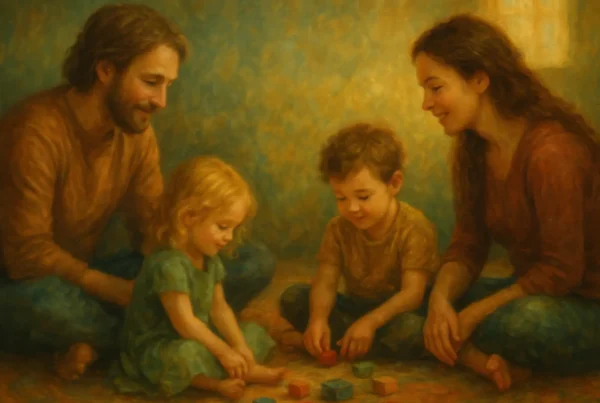
Within the context of Inner Child work, childhood trauma refers to any event or repeated experience during early development that the child was unable to integrate. These moments behave like unhealed wounds. They often occurred when there was a breach in safety — a lack of protection, presence, or emotional connection at a moment when it was needed most.
When a child cannot access emotional safety in the environment, they instinctively seek alternative strategies to get their needs met. These adaptive strategies may be subtle or dramatic, but they are always intelligent. Over time, however, these survival patterns can harden into behaviours that follow us into adulthood, shaping our reactions, relationships, and sense of identity.
This is the origin of the division:
- the wounded Inner Child carrying unmet needs,
- and the inner parent/adult attempting to navigate life from the outside.
We find ourselves returning again and again to familiar behaviours — not because they serve us now, but because they once created a small but significant chemical sense of relief. The psyche repeats what once kept it alive.
Why this work matters
Inner Child work opens a direct line of communication with these early strategies and the parts of us that formed them. By meeting these younger selves with compassion and clarity, we begin to understand the protective mechanisms we built, and we can gently dismantle the patterns that are disrupting our adult life.
This work does not erase the past.
It integrates it.
The aim is to restore connection, agency, and internal safety so that the adult self and the child self no longer operate in conflict, but in cooperation.
Moving forward
You do not have to approach your wounds alone — and you were never meant to.
Inner Child work becomes profoundly life-changing not because it “fixes” you, but because it reconnects you to the part of you that always wanted to live fully.
Many participants describe this moment as coming home to themselves. They speak of a sense of internal warmth returning after years of numbness, or the shock of realising that the child inside them had been waiting — patiently, faithfully — for someone to finally listen.
For some, the earliest changes are subtle:
a softening of tension in the chest, a feeling of being able to breathe again, a small spark of curiosity toward life.
For others, the shift is more dramatic:
“colours returned,”
“food tasted different,”
“I felt enthusiasm for the first time in years,”
“I could finally sense my own future again.”
This work doesn’t only help you resolve the past.
It restructures the way you relate to the present.
As you learn to communicate with your Inner Child, everyday life begins to transform:
You become more discerning about relationships and boundaries.
Habits and coping mechanisms lose their grip as the underlying wound receives attention.
You naturally begin to care for your health, environment, and daily rhythm — not from discipline, but from genuine self-regard.
A renewed enthusiasm for life starts rising from within — not forced, but organic.
Many participants notice that lifestyle changes become almost effortless.
They sleep more deeply.
They choose kinder routines.
They reconnect with creativity, playfulness, and purpose.
They begin to feel led by something authentic, not by old survival patterns.
This is the quiet miracle of Inner Child work:
as integration takes root, life becomes less about managing pain and more about expanding possibility.
If you feel called, speak to a practitioner.
Together you can explore your history, re-establish inner safety, and step into a new way of being — one defined by clarity, connection, and a renewed relationship with your Inner Child.
Your life does not have to be shaped by the wounds you inherited.
A different future is available, and it begins within.